10 Best Beginner Sewing Machines in 2026 | Most Under $300
Table of Contents
- Quick Comparison: Top 10 Beginner Sewing Machines
- Budget Guide: How Much Should You Spend?
- 1. Brother CS7000X | Best Overall for Beginners
- 2. Singer 4423 | Top Non-Computerized Machine
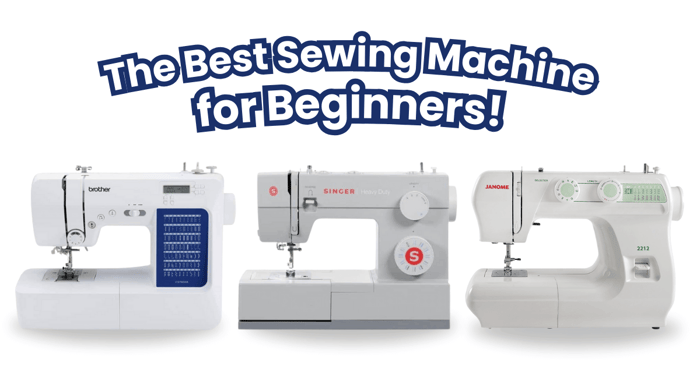
- 3. Janome 2212 | Best Simple & Reliable
- 4. Singer MX60 | Simple Sewing Machine
- 5. Brother GX37 | Small and Portable
- 6. Brother 6000i | Best for Quilting
- 7. Husqvarna Viking Jade 20 | Durable Workhorse
- 8. Brother XR9550PRW | Best Intermediate
- 9. Bernette 35 | Swiss Design
- 10. Janome New Home | Best for Kids
- Buying Guide: Features That Matter
- Mechanical vs. Computerized
- Brand Comparison
- First Projects for Beginners
- Essential Tools Beyond the Machine
- Conclusion: Which Machine Should You Choose?
- FAQs
Are you looking for the best sewing machine for beginners? I've been there! Twelve years ago, I received a $79 sewing machine as a gift when my daughter was born, and it jumpstarted my entire sewing journey — eventually leading me to create Peek-a-Boo Pattern Shop and design hundreds of patterns.
Here's the truth: you don't need to spend thousands on an advanced sewing machine when you're starting out. The 10 machines featured here all cost under $400 and include the stitches and features necessary to complete virtually any beginner to intermediate project.
This guide is based on my own experience testing machines, plus feedback from our Peek-a-Boo Pattern Shop Facebook Group of over 50,000 sewists who've shared what actually works for beginners.
Quick Comparison: Top 10 Beginner Sewing Machines
| Rank | Machine | Price | Best For | Stitches | Key Feature | Rating |
|---|---|---|---|---|---|---|
| #1 | Brother CS7000X | $200-220 | Overall best value | 70 | Auto threader + LCD | ⭐⭐⭐⭐⭐ |
| #2 | Singer 4423 | $230-280 | Heavy-duty | 23 | 60% stronger motor | ⭐⭐⭐⭐⭐ |
| #3 | Janome 2212 | $150-200 | Simple & reliable | 12 | No-frills workhorse | ⭐⭐⭐⭐½ |
| #4 | Singer MX60 | $130-150 | Budget-friendly | 6 | Ultra-affordable | ⭐⭐⭐⭐ |
| #5 | Brother GX37 | $180-200 | Portable | 37 | Lightweight (15 lbs) | ⭐⭐⭐⭐½ |
| #6 | Brother 6000i | $180-220 | Quilting | 60 | Wide table | ⭐⭐⭐⭐½ |
| #7 | Husqvarna Jade 20 | $350-400 | Thick fabrics | 82 | Powerful motor | ⭐⭐⭐⭐½ |
| #8 | Brother XR9550PRW | $250-300 | Intermediate | 165 | 850 stitches/min | ⭐⭐⭐⭐½ |
| #9 | Bernette 35 | $200-250 | Swiss quality | 23 | Durable construction | ⭐⭐⭐⭐ |
| #10 | Janome New Home | $100-150 | Kids/tweens | 14 | Youth-friendly | ⭐⭐⭐⭐ |
Budget Guide: How Much Should You Spend?
Under $150: Entry-Level Testing
Best picks: Singer MX60 ($130-150), Janome New Home ($100-150). What you get: Basic stitches, simple operation, lightweight. Best for: Testing interest, kids, very tight budgets. Limitations: Fewer features, may struggle with thick fabrics.
$150–$250: Sweet Spot for Most Beginners
Best picks: Brother CS7000X ($200-220), Janome 2212 ($150-200), Brother GX37 ($180-200), Brother 6000i ($180-220), Bernette 35 ($200-250). What you get: Good feature set, durability, room to grow. Best for: Most beginners — these will last 5-10+ years. Value: Best bang for your buck.
$250–$400: Advanced Beginner/Intermediate
Best picks: Singer 4423 ($230-280), Brother XR9550PRW ($250-300), Husqvarna Jade 20 ($350-400). What you get: Heavy-duty motors, more stitches, professional results. Best for: Serious hobbyists, makers selling items, those sewing frequently. Worth it if: You know you'll stick with sewing long-term.
1. Brother CS7000X | Best Overall for Beginners
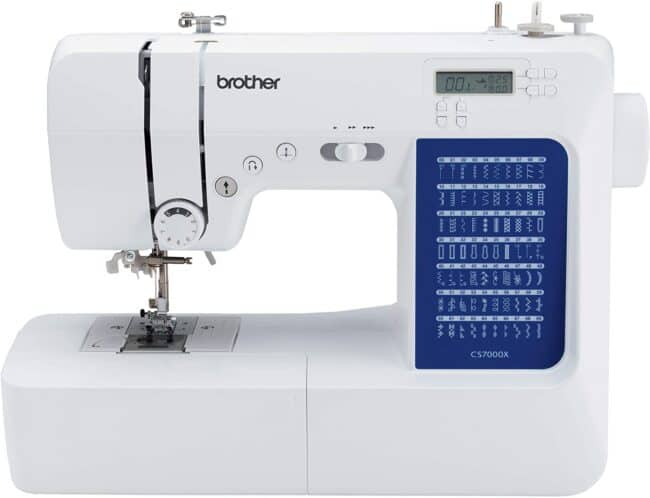
Price: $200-220 | Stitches: 70 | Weight: 12.3 lbs
The Brother CS7000X consistently tops our recommendations for beginners, and for good reason. At $200-220, it offers an incredible feature set that you'd expect from machines costing twice as much.
Key Features: 70 built-in stitches (straight, zigzag, decorative, stretch), 7 one-step buttonhole styles, automatic needle threader, LCD display for stitch selection, adjustable speed control, drop-in bobbin (jam-resistant), free arm for sleeves and cuffs, extension table included, durable metal frame, and lightweight enough to move and store.
What's Included: Wide table/extension table, 7 presser feet (quilting, zipper, buttonhole, blind stitch, button, walking, zigzag), needle set and bobbins, instructional DVD, 25-year limited warranty, and free phone support.
PROS: ✅ Exceptional value — most features per dollar ✅ Automatic needle threader (beginners love this!) ✅ LCD screen makes stitch selection easy ✅ 70 stitches provide room to grow ✅ Speed control prevents runaway stitching ✅ Lightweight but sturdy (12.3 lbs) ✅ Quiet operation ✅ Includes walking foot (great for quilting) ✅ Extension table for larger projects ✅ 25-year warranty
CONS: ❌ Can struggle with very thick fabrics (10+ layers) ❌ Plastic body (not all-metal construction) ❌ Some users report tension issues (usually user error) ❌ Thread cutter could be sharper
Best For: Beginners wanting to grow into intermediate sewing, garment sewers making dresses and pajamas, quilters (comes with walking foot!), crafters making bags and home decor, and anyone wanting the best overall value.
What You Can Make: Everything from simple pillowcases to fitted clothing, quilts, bags with zippers, home decor, kids' clothes, costumes, and more. This machine won't limit your creativity.
Bottom Line: If you can only afford one machine and want it to last 10+ years, this is it. The CS7000X hits the sweet spot of features, price, and reliability. It's the machine I recommend most often to beginners in our Facebook group.
Real User Feedback: "Best beginner machine I've ever owned. The automatic threader alone is worth it!" – Sarah M. "I've sewn everything from cotton t-shirts to canvas bags on this machine. It handles it all." – Jessica T.
2. Singer 4423 | Top Non-Computerized Machine
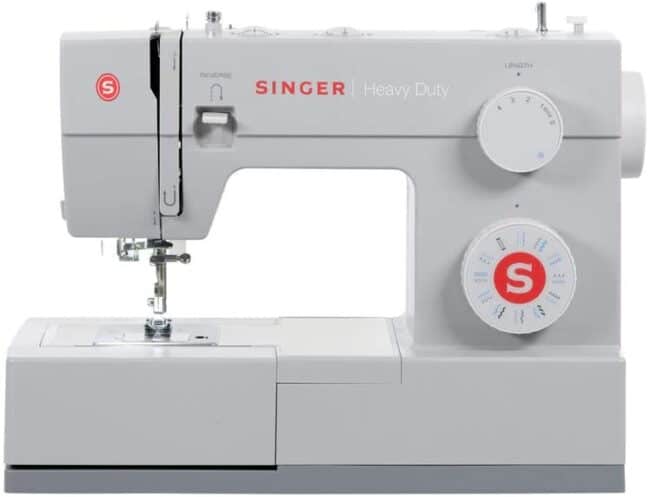
Price: $230-280 | Stitches: 23 | Weight: 17 lbs
The Singer 4423 is built like a tank. If you're planning to sew through denim, canvas, leather, or multiple layers regularly, this is your machine.
Key Features: Heavy-duty metal frame (extra sturdy), 60% stronger motor than standard machines, 1,100 stitches per minute (very fast!), 23 built-in stitches, one-step buttonhole, high presser foot lift for thick fabrics, automatic needle threader, stainless steel bedplate for smooth fabric feed, and top drop-in bobbin.
What's Included: 4 presser feet (all-purpose, zipper, buttonhole, button sewing), extra bobbins and needles, accessory kit, soft-sided dust cover, 25-year limited warranty, and free online classes.
PROS: ✅ POWERFUL — sews through anything (denim, canvas, leather) ✅ Metal frame = very stable, no wobbling ✅ Super fast (1,100 stitches/minute) ✅ High presser foot lift handles thick layers ✅ Durable construction built to last decades ✅ Simple mechanical design (easy to troubleshoot) ✅ Automatic needle threader ✅ Quiet despite power ✅ 25-year warranty
CONS: ❌ Heavy (17 lbs) — not as portable ❌ Only 23 stitches (fewer decorative options) ❌ No LCD screen or computerized features ❌ Can be intimidating for absolute beginners ❌ Fast speed requires foot pedal control
Best For: Sewing heavy fabrics (denim, canvas, upholstery), making bags, purses, and backpacks, home decor with thick materials, quilters working with batting, anyone who wants a workhorse machine, and sewists making items to sell.
What You Can Make: Heavy-duty projects like canvas totes, denim jeans, leather wallets, thick quilts, upholstered items, outdoor cushions, workwear, bags, and more.
Bottom Line: If you prioritize power and durability over fancy features, the Singer 4423 is unbeatable. It's a mechanical machine that will last 20+ years with basic maintenance. Perfect for sewists who need to tackle tough fabrics.
Real User Feedback: "Sewed through 8 layers of denim without breaking a sweat!" – Mike D. "I've had this machine for 7 years and it's still going strong. Best investment." – Rachel K.
3. Janome 2212 | Best Janome Brand Beginner Sewing Machine
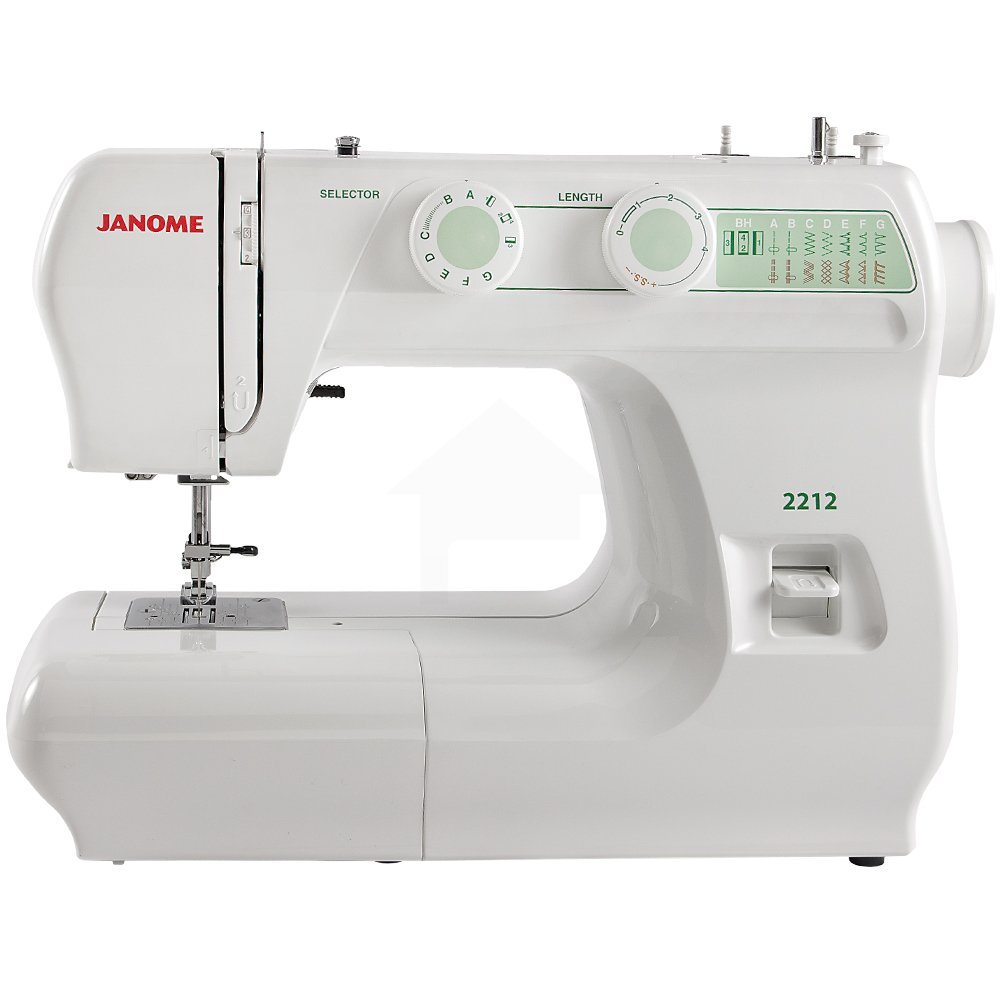
Price: $150-200 | Stitches: 12 | Weight: 16 lbs
The Janome 2212 is the definition of "simple and reliable." No frills, no fancy screens — just a solid mechanical machine that does what it's supposed to do.
Key Features: 12 built-in stitches (all the essentials), 4-step buttonhole, free arm for cuffs and sleeves, adjustable stitch length and width, front-load bobbin system, dial stitch selection, and reverse lever for backstitching.
What's Included: Foot pedal, accessories (zipper foot, buttonhole foot, etc.), hard protective case, manual with stitch guide, and 25-year limited warranty.
PROS: ✅ Simple — perfect for beginners overwhelmed by features ✅ Reliable Janome quality (brand known for durability) ✅ Easy to learn and use ✅ Mechanical design = easy troubleshooting ✅ Portable with included hard case ✅ Handles variety of fabrics well ✅ Quiet operation ✅ 25-year warranty ✅ Great value for the price
CONS: ❌ Only 12 stitches (limited decorative options) ❌ No automatic needle threader ❌ Heavier than some models (16 lbs) ❌ No LCD screen or digital features ❌ May feel too basic for some users
Best For: Absolute beginners who want simple, sewists intimidated by technology, people who value reliability over features, garment sewers making beginner patterns, and anyone wanting a no-nonsense machine.
What You Can Make: Basic clothing, home decor, quilts, bags, simple costumes, children's clothes — anything that doesn't require decorative stitches.
Bottom Line: If you want a machine that "just works" without complications, the Janome 2212 is perfect. It's been a bestseller for years because it's reliable, simple, and affordable. You won't outgrow it quickly if you stick to basic projects.
Real User Feedback: "I've had this for 10 years and never had a single problem. It just keeps going!" – Linda S. "Perfect for beginners. No confusing buttons or settings." – Amy H.
4. Singer MX60 | Simple Sewing Machine
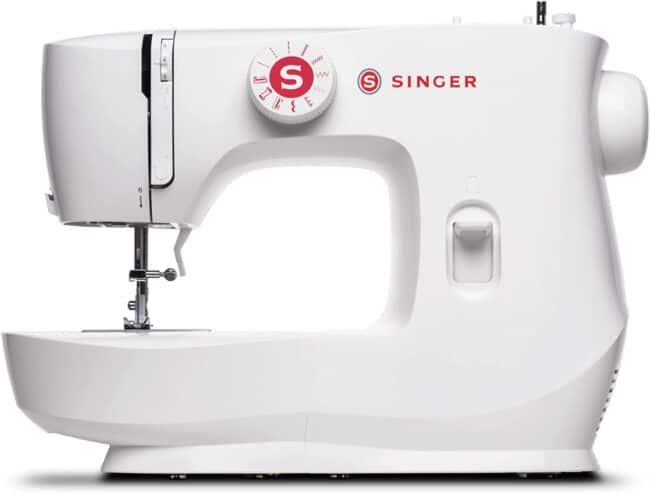
Price: $130-150 | Stitches: 6 | Weight: 12 lbs
The Singer MX60 proves you don't need to spend hundreds to get started sewing. At $130-150, it's a legitimate sewing machine that can handle real projects.
Key Features: 6 built-in stitches (enough for basics), heavy-duty metal frame, adjustable stitch length and width, free arm for circular sewing, top drop-in bobbin, reverse stitch lever, and 4-step buttonhole.
PROS: ✅ Very affordable ($130-150) ✅ Metal frame (durable despite low price) ✅ Lightweight (12 lbs) and portable ✅ Simple to operate ✅ Free arm for sleeves ✅ Good for testing if sewing is for you ✅ Handles basic fabrics well
CONS: ❌ Only 6 stitches (very limited) ❌ No automatic features ❌ May struggle with thick fabrics ❌ Fewer accessories included ❌ You'll likely outgrow it within 1-2 years ❌ No built-in needle threader
Best For: Absolute beginners on tight budgets, testing interest before investing more, kids/tweens learning to sew, simple mending and alterations, and basic home decor projects.
What You Can Make: Simple items like pillowcases, basic tote bags, simple skirts, pajama pants, curtains, and napkins — projects using straight stitches and zigzag.
Bottom Line: Perfect for testing the waters. If you're not sure sewing is for you, start here. If you discover you love it, upgrade to the Brother CS7000X or Janome 2212. Think of this as a "gateway machine."
5. Brother GX37 | Small and Portable Machine
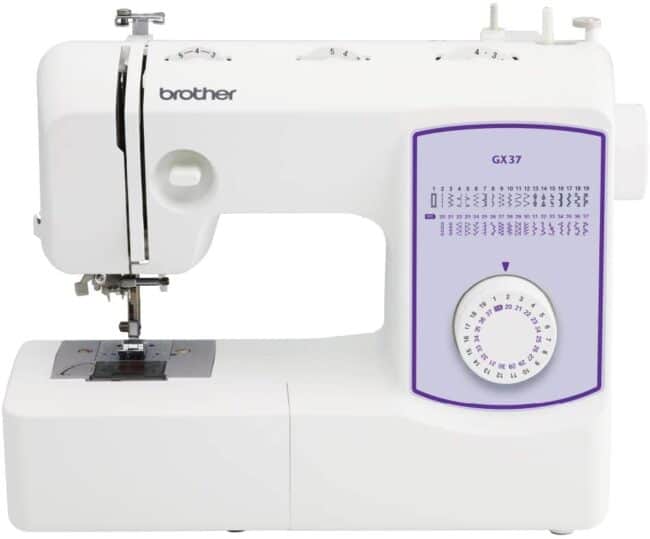
Price: $180-200 | Stitches: 37 | Weight: 15 lbs
The Brother GX37 is the little machine that could. At just 15 pounds, it's easy to move and store while still offering 37 stitches.
Key Features: 37 built-in stitches, one-step automatic buttonholer, drop-in bobbin system, free arm, built-in needle threader, wide table included, 6 presser feet included, lightweight and portable.
PROS: ✅ Lightweight (15 lbs) — easy to transport ✅ 37 stitches for variety ✅ Automatic needle threader ✅ Wide table for larger projects ✅ Good value at $180-200 ✅ 6 presser feet included ✅ Drop-in bobbin (easy) ✅ Quiet operation
CONS: ❌ Less powerful than larger machines ❌ May struggle with very thick fabrics ❌ Plastic construction (not as durable as metal) ❌ Smaller throat space
Best For: Apartment dwellers with limited space, sewists who move their machine frequently, travel sewists or class-takers, and beginners wanting portability plus features.
What You Can Make: Most garments, quilts, bags, home decor. Best with light to medium-weight fabrics like knit fabrics and cotton.
Bottom Line: Best choice if portability matters. At 15 lbs, you can easily carry it to classes, move it to storage, or sew in different rooms. Doesn't sacrifice too many features for the weight savings.
6. Brother 6000i | Beginner Choice for Quilting Enthusiasts
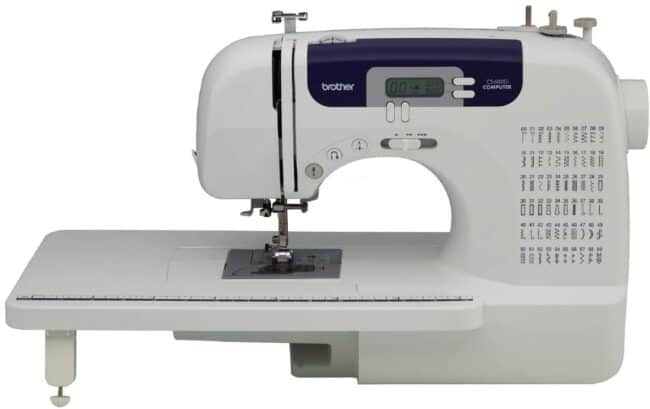
Price: $180-220 | Stitches: 60 | Weight: 11.6 lbs
The Brother 6000i (also called CS6000i) is a favorite among beginner quilters thanks to its wide table and quilting features.
Key Features: 60 built-in stitches, 7 one-step buttonholes, automatic needle threader, wide table (great for quilts!), drop-in bobbin, adjustable speed control, free arm, and LCD display.
PROS: ✅ Wide table perfect for quilting ✅ 60 stitches including decorative ✅ Automatic needle threader ✅ Speed control for beginners ✅ Very lightweight (11.6 lbs) ✅ LCD display ✅ Great value ($180-220) ✅ Quiet
CONS: ❌ Lightweight = less stable for thick fabrics ❌ Plastic construction ❌ Some tension issues reported
Best For: Beginner quilters, lightweight fabric projects, garment sewing, and anyone wanting a wide workspace.
Bottom Line: If quilting is your primary interest, the wide table makes this worth considering. Otherwise, the CS7000X offers similar features with better construction.
7. Husqvarna Viking Jade 20 | Durable Workhorse Machine
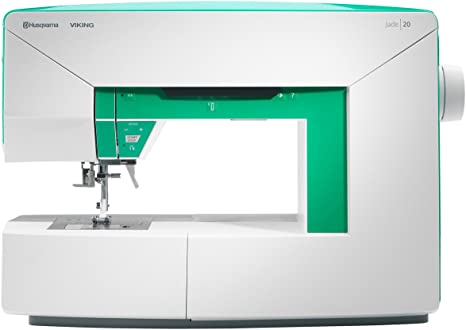
Price: $350-400 | Stitches: 82 | Weight: 19 lbs
The Husqvarna Viking Jade 20 is for sewists who want premium quality and durability from day one. It's an investment, but it's built to last decades.
Key Features: 82 stitches (7mm wide), large work area, powerful motor for thick fabrics, modern Scandinavian design, electronic foot control, free arm, needle up/down button, and advanced stitch features.
PROS: ✅ Exceptional build quality ✅ Powerful — handles thick fabrics easily ✅ 82 stitches with 7mm width ✅ Large workspace ✅ Will last 20+ years ✅ Smooth, quiet operation ✅ Premium brand reputation
CONS: ❌ Higher price ($350-400) ❌ Heavier (19 lbs) ❌ May be overkill for casual sewists ❌ Fewer dealers/service centers than Brother/Singer
Best For: Serious beginners planning to sew frequently, thick fabric sewists making hoodies and jackets, anyone wanting buy-it-for-life quality, and sewists making items to sell.
Bottom Line: If budget allows and you're committed to sewing long-term, this is an investment piece that will serve you for decades. The Husqvarna quality is legendary.
8. Brother XR9550PRW | Best Intermediate Machine
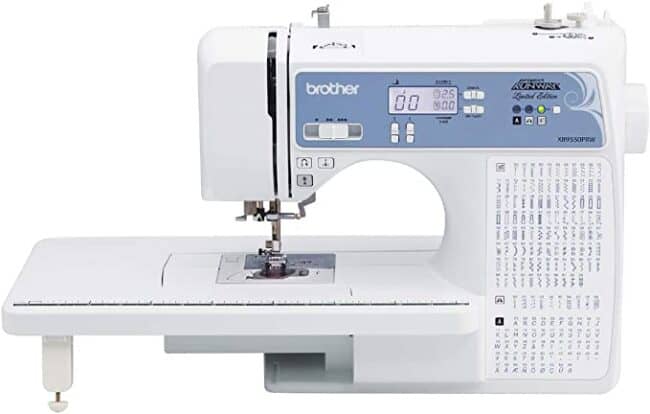
Price: $250-300 | Stitches: 165 | Weight: 13 lbs
The Brother XR9550PRW bridges beginner and intermediate perfectly. With 165 stitches, you'll never run out of options.
Key Features: 165 built-in stitches, 8 one-step buttonholes, LCD screen, automatic needle threader (F.A.S.T system), 850 stitches per minute, 7 presser feet included, hard case for protection, and speed control.
PROS: ✅ 165 stitches = endless creativity ✅ Fast (850 stitches/min) ✅ Advanced features for growth ✅ Automatic needle threader ✅ Hard case included ✅ 7 presser feet ✅ LCD screen
CONS: ❌ Can overwhelm true beginners ❌ More expensive ($250-300) ❌ Complexity may frustrate some
Best For: Beginners with some experience, crafters wanting decorative options, sewists planning to advance quickly, and as a gift for a serious hobbyist.
Bottom Line: Great if you want to skip the true beginner machine and start with something you'll grow into. The 165 stitches mean you won't outgrow it for years.
9. Bernette 35 | Superior Swiss Design Machine
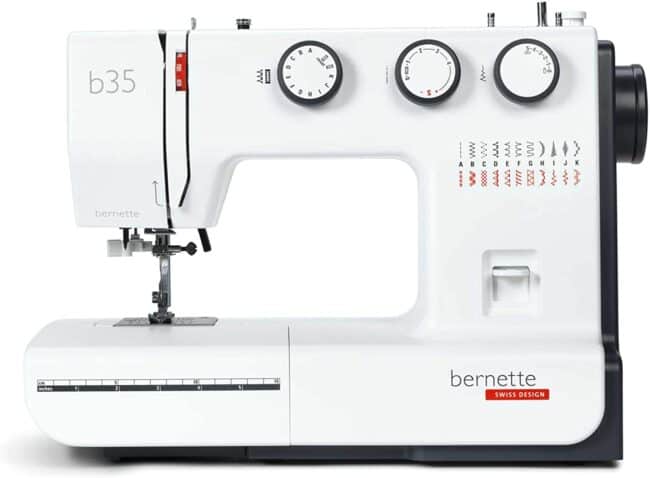
Price: $200-250 | Stitches: 23 | Weight: 17 lbs
The Bernette 35 brings Swiss engineering quality to the beginner market. Made by Bernina's budget brand, it's built to last.
Key Features: 23 built-in stitches, one-step buttonhole, adjustable tension while sewing, modern design, free arm, drop-in bobbin, and metal construction.
PROS: ✅ Swiss engineering quality ✅ Very durable construction ✅ Sturdy and stable ✅ Simple mechanical design ✅ Adjustable tension on-the-fly ✅ Handles variety of fabrics ✅ Reliable
CONS: ❌ Only 23 stitches ❌ No automatic needle threader ❌ Heavier (17 lbs) ❌ No computerized features
Best For: Sewists valuing quality over quantity, anyone wanting Swiss reliability, garment sewers, and people who prefer mechanical machines.
Bottom Line: If you appreciate quality construction and don't need 100+ stitches, the Bernette 35 is an excellent choice. The Swiss engineering shows in every stitch.
10. Janome New Home Sewing Machine | Great Beginner Machine for Kids
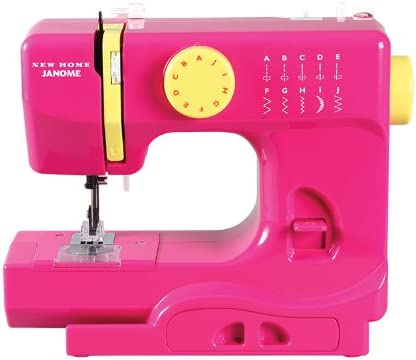
Price: $100-150 | Stitches: 14 | Weight: 12 lbs
The Janome New Home is perfect for kids and tweens learning to sew. It's simple, safe, and affordable.
Key Features: 14 built-in stitches, front-loading bobbin, free arm for sleeves, lightweight (12 lbs), simple dial controls, manual and DVD included.
PROS: ✅ Very affordable ($100-150) ✅ Kid-friendly design ✅ Lightweight and portable ✅ Simple to learn ✅ Durable Janome quality ✅ Comes with instructional DVD
CONS: ❌ Limited features ❌ Tweens/teens may outgrow quickly ❌ No automatic features
Best For: Kids ages 8-14, tweens learning to sew, parents wanting to test kids' interest, and sewing classes and camps.
What You Can Make: Simple projects like pillows, bags, basic clothing, doll clothes.
Bottom Line: If you're buying for a child, this is perfect. Simple enough to learn, durable enough to last, affordable enough you won't cry if they lose interest. For more on kids' machines, see our Best Sewing Machine for Kids guide.
Buying Guide: Features That Matter for Beginners
Essential Features (Must-Have)
1. Straight Stitch & Zigzag — The two stitches you'll use 95% of the time. Everything else is bonus.
2. Reverse Stitch — For backstitching to secure seams. Non-negotiable.
3. Free Arm — Lets you sew sleeves, cuffs, and pant legs without awkward bunching.
4. Adjustable Stitch Length & Width — Allows customization for different fabrics and projects.
5. Drop-in or Front-Load Bobbin — Makes threading easier. Drop-in is generally simpler for beginners.
6. Presser Foot Pressure — Ability to adjust pressure helps with different fabric thicknesses, especially when working with knit fabrics.
Mechanical vs. Computerized: Which is Better for Beginners?
Mechanical Machines
Examples: Singer 4423, Janome 2212, Bernette 35
PROS: ✅ Simpler to understand and troubleshoot ✅ More durable (fewer parts to break) ✅ Usually less expensive ✅ Easier to maintain ✅ No electronics to fail
CONS: ❌ Fewer automatic features ❌ Manual stitch selection ❌ No digital displays ❌ Less precise stitch adjustments
Best for: People intimidated by technology, those wanting simplicity, sewists on a budget.
Computerized Machines
Examples: Brother CS7000X, Brother 6000i, Brother XR9550PRW
PROS: ✅ Automatic features (needle threader, buttonholes) ✅ LCD displays show settings ✅ More stitch options ✅ Precise stitch control ✅ Memory functions
CONS: ❌ More expensive usually ❌ Electronics can fail ❌ Steeper learning curve ❌ May require professional repair
Best for: Tech-comfortable sewists, those wanting features, people who will use many stitches.
Bottom Line: Either works fine for beginners! Choose based on your comfort with technology and budget.
Nice-to-Have Features (Not Essential But Helpful)
Automatic Needle Threader — Huge time-saver and reduces eye strain. Worth it if available in your budget.
Speed Control — Prevents runaway stitching while learning. Great for building confidence.
Built-in Light — Helps see what you're doing. Can substitute with an external lamp if needed.
Extension Table — Useful for larger projects like quilts or big garments.
Multiple Presser Feet — More feet = more project options. Look for at least zipper and buttonhole feet.
Features You DON'T Need as a Beginner
100+ Stitches — You'll use maybe 5-10 regularly. Don't pay for stitches you'll never use.
Embroidery Functions — This is a separate hobby requiring a separate machine. Skip it.
Touchscreens — Flashy but unnecessary. Dials and buttons work fine.
WiFi Connectivity — Gimmick for beginners. Focus on core sewing features.
Brand Comparison: Which is Best for Beginners?
Brother
Price Range: $100-300. Best For: Best overall value for beginners. Strengths: Feature-packed, affordable, good warranty, readily available. Weaknesses: Some quality control issues, plastic construction on many models. Best Models: CS7000X, GX37, 6000i, XR9550PRW.
Singer
Price Range: $130-280. Best For: Heavy-duty sewing, brand recognition. Strengths: Strong motors, durable metal frames, legacy brand. Weaknesses: Computerized models can be finicky, mixed quality control. Best Models: 4423, MX60.
Janome
Price Range: $100-200. Best For: Reliability and simplicity. Strengths: Exceptional build quality, reliable, simple operation, excellent warranty. Weaknesses: Fewer features per dollar, limited availability. Best Models: 2212, New Home.
Husqvarna Viking
Price Range: $350-500+. Best For: Premium quality, serious beginners. Strengths: Superior build quality, powerful, Scandinavian design, long-lasting. Weaknesses: Higher price point, fewer dealers. Best Models: Jade 20.
Bernette (Bernina's Budget Brand)
Price Range: $200-250. Best For: Swiss quality on a budget. Strengths: Excellent construction, reliable, good warranty. Weaknesses: Fewer features, limited model selection. Best Models: Bernette 35.
Our Recommendation: For best value, go with Brother. For best quality, choose Janome or Husqvarna.
First Projects: What Should Beginners Learn to Sew?
Start with these projects to build skills progressively:
Level 1 — Straight Lines Only: Napkins or placemats, fabric bookmarks, simple pillowcases, and tote bags (no pockets).
Level 2 — Adding Curves: Zippered pouches, drawstring bags, simple skirts with elastic waist, and basic pajama pants.
Level 3 — Clothing: T-shirts (knit fabrics), simple dresses, elastic-waist shorts, and tank tops.
Pro Tip: Check out our beginner-friendly sewing patterns for step-by-step projects designed for new sewists!
Essential Tools Needed Beyond the Machine
Don't forget these basics to complete your sewing setup:
Cutting Tools: Fabric scissors (never use on paper!), thread snips, and a seam ripper.
Measuring Tools: Measuring tape, clear ruler, and marking tools (chalk or fabric pens).
Notions: Pins and pin cushion, hand-sewing needles, all-purpose polyester thread, extra machine needles, and bobbins.
Nice to Have: Pattern weights, rotary cutter and mat, iron and ironing board, and fabric clips.
For a complete list, see our 30 Top Sewing Tools guide.
Conclusion: Which Machine Should You Choose?
Best Overall: Brother CS7000X ($200-220) — Perfect balance of features, price, and reliability. Best for most beginners.
Best Budget: Singer MX60 ($130-150) or Janome New Home ($100-150) — Test the waters without breaking the bank.
Best Heavy-Duty: Singer 4423 ($230-280) — For thick fabrics and power users.
Best Simple/Reliable: Janome 2212 ($150-200) — No frills, just solid sewing.
Best for Kids: Janome New Home ($100-150) — Youth-friendly and affordable.
Best Investment: Husqvarna Jade 20 ($350-400) — Premium quality that lasts decades.
My Personal Recommendation: If you can afford $200-250, get the Brother CS7000X. It will serve you well for years and won't limit your growth. If budget is tight, the Singer MX60 or Janome 2212 are solid choices that won't frustrate you.
Remember: The best sewing machine is the one you'll actually use! Don't get paralyzed by choices. Pick one, start sewing, and enjoy the journey.
Ready to start sewing? Browse our beginner-friendly patterns, join our Facebook Group for support, and follow us on Instagram for inspiration. And check out our sewing fundamentals guides: How to Sew a Zipper, Intro to Hemming, and How to Sew Curves. Happy sewing!
Frequently Asked Questions
What is the best sewing machine for a complete beginner?
The Brother CS7000X is the best overall sewing machine for beginners. At $200-220, it offers 70 stitches, an automatic needle threader, LCD display, speed control, and a 25-year warranty. It's the most recommended machine in our community of 50,000+ sewists because it balances features, ease of use, and price better than any other beginner machine on the market.
How much should I spend on my first sewing machine?
The sweet spot for most beginners is $150-250. In this range you get real features, durability, and room to grow — machines that will last 5-10+ years. If budget is very tight, you can start with a $100-150 machine to test your interest, but plan to upgrade if you get hooked. Spending over $300 is only worth it if you're committed to sewing long-term and want a premium machine like the Husqvarna Jade 20.
Should I buy a mechanical or computerized sewing machine?
Either works well for beginners. Mechanical machines (like the Singer 4423 or Janome 2212) are simpler, more durable, and easier to troubleshoot. Computerized machines (like the Brother CS7000X) offer automatic features like needle threaders, LCD displays, and more stitch options. Choose mechanical if you prefer simplicity and hands-on control. Choose computerized if you're comfortable with technology and want convenience features.
Can a beginner sewing machine sew through thick fabrics like denim?
Most beginner machines can handle 2-4 layers of denim. For consistently sewing through very thick fabrics like canvas, leather, or multiple denim layers, you'll want a heavy-duty machine like the Singer 4423, which has a 60% stronger motor and a high presser foot lift specifically designed for thick materials. Lighter machines like the Brother GX37 or Singer MX60 may struggle with heavy-duty projects.
What features do I actually need as a beginner?
The essential features for beginners are: straight stitch and zigzag stitch (you'll use these 95% of the time), reverse stitch for backstitching, a free arm for sewing sleeves and cuffs, adjustable stitch length and width, and a drop-in or front-load bobbin system. Nice-to-have features include an automatic needle threader, speed control, and built-in light. You do NOT need 100+ stitches, embroidery functions, touchscreens, or WiFi connectivity as a beginner.
What should I sew first as a beginner?
Start with straight-line projects to build confidence: pillowcases, simple tote bags, napkins, or fabric bookmarks. Once comfortable, move to projects with curves like zippered pouches, drawstring bags, and elastic-waist skirts. When you're ready for clothing, start with simple pajama pants or basic dresses using beginner-friendly sewing patterns that include step-by-step instructions.
Is Brother or Singer better for beginners?
Both are excellent brands for beginners, but they excel in different areas. Brother offers the best overall value with more features per dollar — their CS7000X is the most popular beginner machine for good reason. Singer excels at heavy-duty sewing — their 4423 has a stronger motor and metal frame that handles thick fabrics better than any Brother in this price range. For most beginners, Brother is the safer choice. For heavy-duty work, go with Singer.
How long will a beginner sewing machine last?
A quality beginner sewing machine in the $150-300 range should last 10-20+ years with basic maintenance. Mechanical machines like the Singer 4423 and Janome 2212 tend to last longest because they have fewer electronic components that can fail. Computerized machines like the Brother CS7000X typically last 10-15 years. Basic maintenance includes regular cleaning, oiling (if required by your model), changing needles frequently, and using quality thread.